John Pippin
March 28, 2026
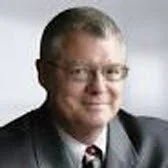
Dr. John Pippin, a physician, educator, animal advocate, devoted son, and beloved friend and colleague, passed away on March 28. He worked tirelessly on behalf of animals, playing an instrumental role in numerous historic achievements to end animal experiments and modernize science and medicine.
Dr. Pippin was born on Jan. 7, 1950, in Brookline, Mass., and raised in Dallas before attending Harvard College as a European History major. After college, he worked for the Harvard police and then as an officer in the Cambridge, Mass., police department for five years before earning his medical degree at the University of Massachusetts, leading a newspaper article at the time to quip, "John Pippin may be the only practicing nuclear cardiologist with 24 felony convictions." He completed his medical residency, chief residency, and clinical cardiovascular fellowship at New England Deaconess Hospital (now Beth Israel-Deaconess Hospital) in Boston. Later, he was the founding director of cardiovascular medicine and medical imaging at Cooper Clinic in Dallas.
Dr. Pippin served on faculty at Harvard Medical School and the Medical College of Virginia, where he was chosen as Cardiology Professor of the Year three times. Later, he brought his gift for mentoring and no-nonsense advocacy to the nonprofit Physicians Committee for Responsible Medicine, where he served as Director of Academic Affairs from 2005 until his death. His previous laboratory work informed his belief that animal experiments were scientifically and ethically unjustifiable, and he worked for more than two decades to advocate for the replacement of animals in research, testing, and medical training.
In 2011, Dr. Pippin testified before the National Academies of Sciences, Engineering, and Medicine on the need to go beyond using chimpanzees in disease research. His efforts played a crucial role in the Academies' landmark report that spelled the end of chimpanzee experiments in the United States. His work with the Physicians Committee was instrumental in replacing the use of animals in deadly training exercises at medical schools across the U.S. and Canada, a once-common practice that he helped end in 2016. In total, he helped convince 133 programs teaching medical students, physicians, or paramedics to replace animals with models based on human anatomy.
He worked to halt plans by the National Aeronautics and Space Administration to use squirrel monkeys in radiation experiments. His analysis, which revealed that the experiments were poorly constructed and would provide no useful information while severely harming the animals, helped cancel the experiments in 2010 before they began.
Dr. Pippin had a knack for speaking to a wide variety of audiences. He testified before the British Parliament in 2005, conducted countless interviews with reporters, and authored or co-authored more than 70 peer-reviewed articles or abstracts, many published in leading medical journals. He was just as comfortable leading protests, like those held in North Texas against the sale of cats and dogs from puppy mills, as he was giving an invited lecture to a meeting of the American College of Cardiology, an organization that granted him the prestigious title of Fellow due to his contributions to the field.
His colleagues remember him as a fearless but warm presence with an unfailing sense of humor, someone who worked long hours but always made time to coach and encourage others. Dr. Pippin often sent kind notes to coworkers after they had given a presentation, published a paper, or simply sent a compelling email. He was also eager to discuss sports (especially his beloved Red Sox) and European history. His desire to keep learning meant he was continuously reading books —always nonfiction — on Ted Williams, Otto von Bismarck, or one of his other interests. He led the local effort against the use of a gas chamber for euthanizing dogs and cats by the animal shelter in Garland, Texas. When the city dismantled the device in 2010 in conjunction with announcing plans for a new adoption center, Dr. Pippin told the Morning News, "You can fight city hall."
Over the decades, Dr. Pippin adopted more than 30 dogs (including Sydney and Hannah, who survived him). At one point, he was sharing his house with 12 canine companions, to whom he happily turned over the property by installing a taller backyard fence and replacing his carpet with sturdy laminate flooring.
He leaves behind a legacy of selflessness, compassion, and a world made kinder by his hard work.